
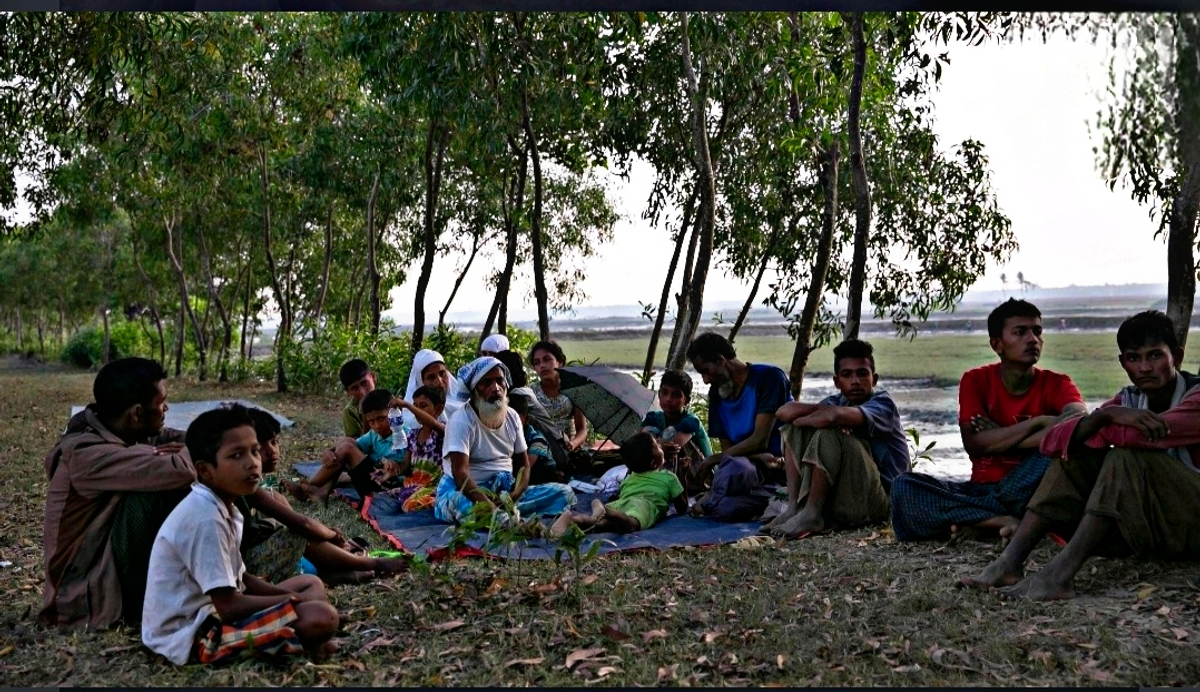
MAUNGDAW, Arakan State: Rohingya families across Arakan State are facing growing hardships as displacement, movement restrictions, fears of forced military recruitment, and the loss of homes continue to shape daily life in Maungdaw and Buthidaung townships, according to local residents and community sources.
The difficulties have been underscored by a series of incidents in recent days that rights observers say reflect the worsening situation for one of the world's most persecuted minorities.
Stranded Along the Naf River
On June 5, a group of 46 Rohingya, including children, elderly people, and individuals suffering from long-term illnesses, were left stranded along the Naf River after being returned from Bangladesh. Local residents said the group had originally fled Buthidaung due to worsening living conditions, including food shortages and ongoing displacement.
After being sent back, the families were reportedly unable to return to their villages and remained on the riverbank with very little food, drinking water, or shelter. Residents said many had nowhere to go and were forced to wait in increasingly difficult conditions.
Two days later, a second group of 16 Rohingya from Buthidaung Township faced a similar situation. The group, which included women, elderly people, and small children, attempted to cross the border but was returned. Local sources said the group spent hours in heavy rain before being detained by the Arakan Army near Mingala Gyi village in Maungdaw Township.
Displacement Worsens as Rainy Season Arrives
The back-to-back incidents have deepened concerns among Rohingya families already living in temporary shelters after leaving their homes in Buthidaung. With the rainy season now underway, flooding and deteriorating weather conditions have made daily life harder still for thousands of people with no stable place to stay.
Forced Recruitment Registration Resumes
Residents in several villages of Maungdaw Township have reported that military recruitment registration has recently resumed. According to local sources, village authorities have been collecting the names of young men and women between the ages of 18 and 30.


